
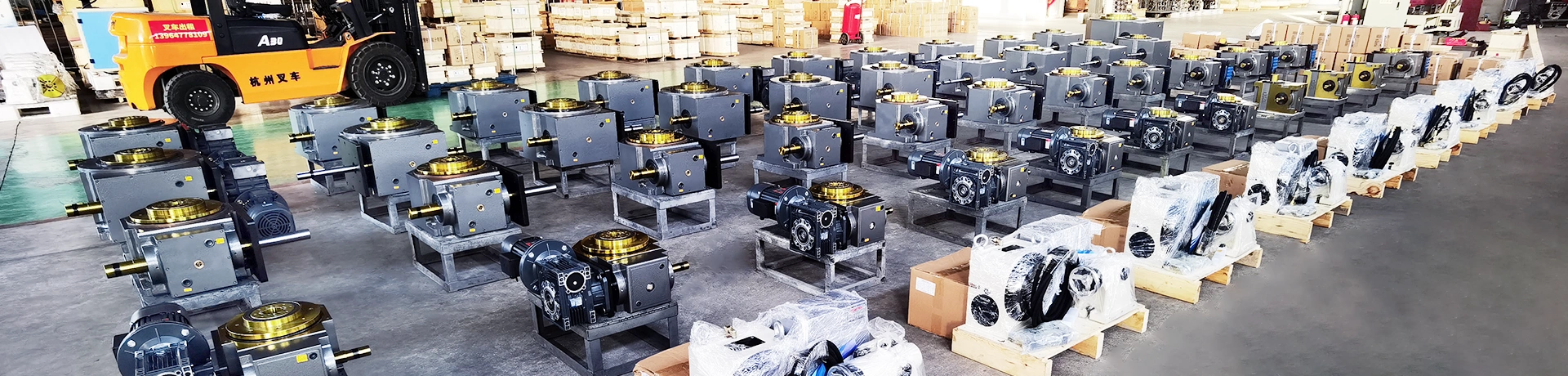
Unlocking the Potential of the Rotary Table: Applications You Didn't Know About
Release time:
2025-10-26
The Unsung Hero of Precision Engineering
When it comes to precision engineering and manufacturing, the Rotary Table is a game changer. You might be wondering, 'What exactly is a Rotary Table?' Well, it's a mechanical device that allows for the rotation of workpieces around a vertical or horizontal axis, making it a crucial tool in various applications.
A Quick Dive into the Mechanism
To get a better grip on how this nifty device works, let's break it down. Typically, a Rotary Table consists of a circular platform that rotates on a spindle. Operators can set the angle of rotation, facilitating tasks such as milling, drilling, and even engraving.
Why Use a Rotary Table?
Using a Rotary Table can significantly enhance productivity. Imagine trying to drill holes at precise angles without the aid of such a device! You'd be in a pickle, right? This tool allows you to achieve complex geometries and intricate designs with ease, which is crucial in fields like aerospace, automotive, and even art!
Applications in Various Industries
Let's talk applications! The versatility of the Rotary Table is astounding. Here are a few scenarios where it shines:
1. Aerospace Engineering
In the aerospace sector, precision is paramount. Engineers use Rotary Tables to machine components that require tight tolerances. Think about it: even a tiny error could lead to catastrophic failures in aircraft. Yikes!
2. Automotive Manufacturing
Car manufacturers also have a soft spot for Rotary Tables. They're used for machining engine blocks and other intricate parts that need to fit together like a jigsaw puzzle. With these tables, manufacturers can crank out high-quality parts at a staggering rate. Talk about efficiency!
3. Metal Fabrication
Metal fabricators rely heavily on Rotary Tables for tasks such as welding and cutting. The ability to rotate the workpiece allows for more accessible access to all angles, ensuring that welds are strong and cuts are precise. It's a win-win situation!
Artistic Applications
But wait, there's more! The creative world also embraces the Rotary Table. Artists and sculptors use it to create intricate designs and patterns that would otherwise be impossible to achieve. It's like having a canvas that spins! Just imagine the possibilities.
4. Jewelry Making
In jewelry making, precision is not just desired; it's required! Jewelers utilize Rotary Tables to engrave intricate designs onto rings and pendants. The result? Stunning pieces that catch the eye and are sure to impress.
Technological Advancements
As we forge ahead into an era of automation and advanced manufacturing technologies, the Rotary Table continues to evolve. Modern designs now integrate CNC (computer numerical control) technology, making them even more precise and user-friendly. It's like having a personal assistant that never gets tired!
5. Robotics and Automation
In robotics, Rotary Tables are crucial for tasks requiring precision and speed. They can be programmed to rotate and position parts quickly, optimizing the production line. This is particularly useful in sectors like electronics, where components are tiny and require meticulous handling.
Conclusion: The Future is Bright
So, there you have it! The Rotary Table is not just a mechanical device; it's a versatile tool that has found its way into numerous industries. Whether you're an engineer, artist, or hobbyist, understanding the applications of a Rotary Table can open up a world of possibilities. So, next time you're in a workshop, keep an eye out for this unsung hero of precision engineering!
recommend Content
Share

Manufacturer of rotary table and cam indexer
Zhucheng HonePan Automation Machinery Plant.
Fax:+86-536-6329789
Zhucheng HonePan Automation Machinery Plant.
No.8 Hone Pan Road Zhen Xi Industrial Park Huanghua Town Zhu Cheng City Shandong Province, China.

Follow Us